Dashboard
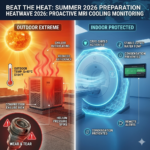
Summer 2026: Is Your MRI Ready for the Heatwave?

As we approach the summer of 2026, meteorologists are predicting record-breaking temperatures. For an MRI clinic, “hot weather” isn’t just about staff comfort—it’s a direct threat to the system’s survival. When the ambient temperature rises, your chiller and cryogenic system work at their absolute limits.

Here is how to prepare your GE Healthcare Signa (and other superconducting magnets) for the coming heat and why monitoring is your primary defense.

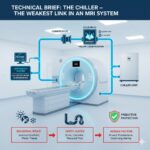
1. The Chiller: Your MRI’s Weakest Link

The chiller’s job is to move heat from the MRI room to the outside world. In summer, the “outside world” is already hot, making heat exchange much less efficient.

  • The Risk: If the chiller cannot cool the water to the required $12°C – 15°C$, the helium compressor will overheat and shut down. Once the compressor stops, the helium inside your magnet starts to boil off rapidly.
  • Pre-Summer Check: Clean the condenser coils of your outdoor unit. Dust, pollen, and debris can reduce efficiency by 30%.

2. The “Helium Pressure Spike”

Higher outdoor temperatures often lead to higher pressure in the cryogenic circuit.

  • The Risk: If your cold head is already slightly worn, summer heat will push it over the edge. A sudden spike in pressure can trigger the safety burst disk, leading to an immediate quench (total loss of helium).
  • Prevention: Monitor the “Return Gas Temperature.” If it’s consistently high, your cold head needs servicing before the heatwave hits, not during it.

3. Humidity and Condensation

Heat often comes with high humidity. When warm, moist air enters a cooled scan room, water condenses on the electronics.

  • The Risk: Condensation can cause short circuits in gradient amplifiers or RF coils.
  • Action: Ensure your HVAC system is de-humidifying properly. Keep the scan room door closed at all times to maintain a stable microclimate.

4. How Cryowatch Saves Your Summer

During a heatwave, events happen fast. A chiller pump might fail at 2:00 PM on a Saturday when the clinic is closed.

  • Proactive Alerts: Cryowatch doesn’t just wait for a failure. It tracks the trend. If the system sees that your water temperature is creeping up day by day, it sends an alert before the compressor shuts down.
  • Remote Management: You can check the “health” of your magnet from your smartphone while on vacation. If a heat-related anomaly occurs, you’ll know instantly.
  • Optimized Cooling: By analyzing summer data, Magmon helps you understand if your current chiller has enough “reserve power” for extreme peaks or if it’s time for an upgrade.

The Summer Rule: It is 10 times cheaper to clean a chiller today than to refill a magnet tomorrow.
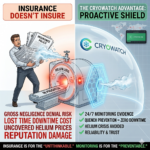
Insurance That Doesn’t Insure: Why a Standard Policy is No Substitute for MRI Monitoring

In the world of high-tech medicine, there is a dangerous illusion: “If something happens to the magnet, the insurance will cover it.” While insurance is a vital tool for business stability, relying on it as your primary safety net for an MRI system is a high-stakes gamble. In 2026, as equipment and helium costs reach record highs, insurance companies have become more meticulous than ever.

Here is why your policy might fail you when you need it most—and how Cryowatch fills the gap.

1. The “Gross Negligence” Trap

Every insurance contract has a clause regarding the “proper operation of equipment.” If a quench occurs because a chiller failed and no one noticed the rising temperature for three days, the insurer may classify this as gross negligence.

  • The Reality: If you cannot prove that you exercised “due diligence” in monitoring the system 24/7, the insurance company has a legal loophole to deny your claim.
  • The Cryowatch Advantage: Our system provides a digital “black box.” It proves that you took every possible measure to monitor the system, making your insurance claim much harder to dispute.

2. The Cost of “Lost Time”

A standard insurance policy usually covers the physical damage (the cost of helium and parts). But what about the revenue you lose while the machine is down?

  • The Reality: A full recovery after a quench can take 2 to 4 weeks. For a busy clinic, 20 days of downtime can mean losing $100,000–$200,000 in revenue. Most standard policies do not cover “Business Interruption” in full, or the deductible is so high that it’s negligible.
  • The Cryowatch Advantage: It is better to prevent the fire than to wait for the insurance payout. Cryowatch detects the “pre-quench” state, allowing you to fix the issue during the night and stay open for patients the next morning.

3. The “Fine Print” on Helium

With the global helium crisis of 2026, some insurers have started adding limits to “consumable” coverage.

  • The Reality: If your policy was signed two years ago, the allocated budget for helium refill might only cover half of today’s market price. You will be forced to pay the difference out of pocket.
  • The Cryowatch Advantage: By preventing the boil-off, you avoid the need to buy helium at “crisis prices” altogether.

4. Reputation: The Uninsurable Asset

When you cancel 300 appointments in one week, those patients don’t wait for your insurance check—they go to your competitor.

  • The Reality: No insurance company can compensate for the loss of trust from referring physicians or the damage to your brand.
  • The Cryowatch Advantage: Reliability is your best marketing tool. Monitoring ensures that your “Open” sign stays lit.

The Verdict: Insurance is for the “unthinkable.” Monitoring is for the “preventable.” In 2026, 90% of MRI failures are preventable.

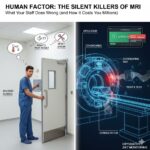
“The Silent Killers” of MRI: What Your Staff Does Wrong (and How It Costs You Millions)

Many clinic owners are convinced that hiring an experienced radiologist and a certified engineer ensures the safety of their MRI system. Unfortunately, practice shows that even the most loyal employee can become the reason for a system failure. Not out of malice, but due to habit, negligence, or a lack of oversight.

Continue reading ““The Silent Killers” of MRI: What Your Staff Does Wrong (and How It Costs You Millions)”
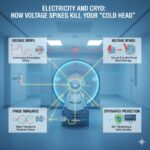
Electricity and Cryo: How Voltage Spikes Kill Your “Cold Head”

Many clinic owners believe that if their MRI scanner is connected to an Uninterruptible Power Supply (UPS), the system is completely safe. However, in practice, a UPS often only protects the console and the electronics, while the “power-hungry” component—the cooling system compressor—is left alone to face the harsh realities of the municipal power grid.

Continue reading “Electricity and Cryo: How Voltage Spikes Kill Your “Cold Head””
Technical Evolution: The Difference Between Magmon 3 and Magmon 4

For a service engineer or a clinic owner working with GE healthcare equipment, understanding the differences between magnet monitor generations is critically important. While both devices perform the same fundamental task—monitoring the status of the cryo system—there is a significant technological gap between them.

Continue reading “Technical Evolution: The Difference Between Magmon 3 and Magmon 4”
1.5T vs. 3.0T MRI: What is the Real Difference for a Clinic?

In the world of modern MRI diagnostics, the most common machines are those with a magnetic field strength of 1.5 Tesla and 3.0 Tesla. For a patient, these are just numbers, but for an engineer or a physician, they represent two different technological universes. GE healthcare is a leader in manufacturing both systems, offering world-class solutions within the Signa product line. Let’s explore which machine is better and how field strength impacts the cryo system.

Continue reading “1.5T vs. 3.0T MRI: What is the Real Difference for a Clinic?”

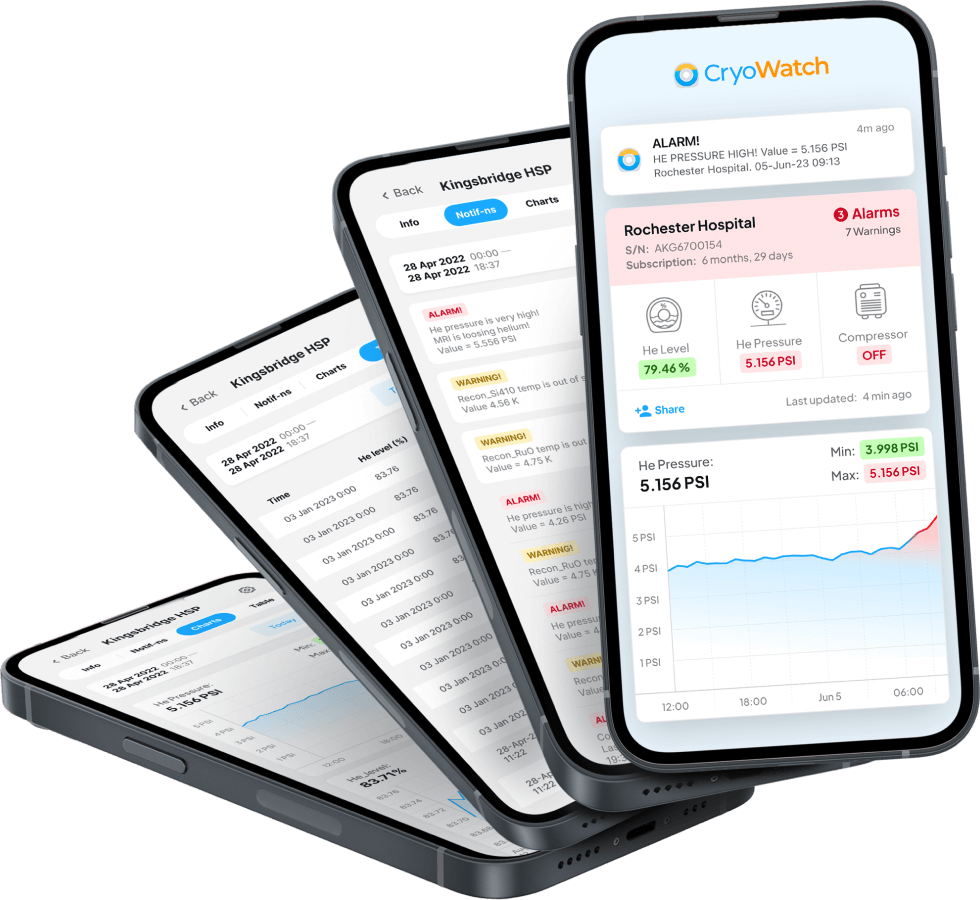
Monitor your MRI system with CryoWatch App

Mobile app