Owning a modern MRI machine is not just about prestige and diagnostic accuracy; it is a major responsibility. High-class equipment, such as the GE healthcare Signa series, requires perfect operating conditions. The biggest nightmare for any clinic’s budget is a “quench.” In this article, we will calculate the real losses from such an incident and learn how the Cryowatch system helps avoid them.
What is a Quench and Why Does it Happen?
To operate the magnet inside an MRI machine, the phenomenon of superconductivity is used. For this state to persist, the magnet coils must be constantly submerged in liquid helium at a temperature of about -269°C. This cooling process is known as cryo support.
A quench is a sudden loss of superconductivity. When the temperature inside the cryostat rises above a critical point, the helium rapidly turns into gas and escapes through an emergency vent pipe. The entire supply of expensive gas can evaporate in just a few minutes.
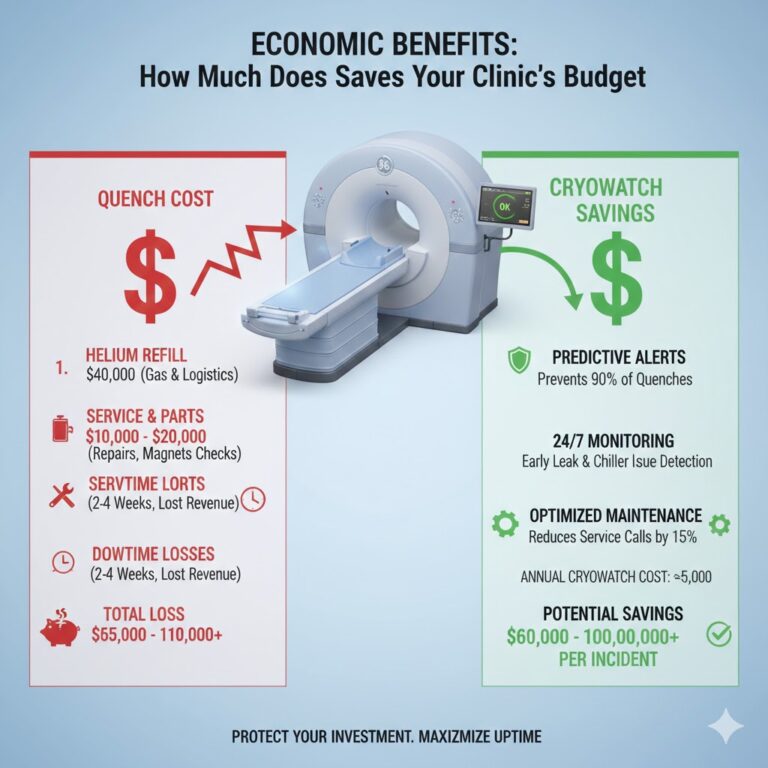
Direct Losses: Calculating the Cost of Helium
The first and most obvious expense is the cost of the helium itself. In modern Signa systems, the helium volume can be several hundred liters.
- Refill Costs: The price of liquid helium is constantly rising. A full refill after a quench can cost tens of thousands of dollars.
- Delivery and Labor: You pay not only for the gas but also for its transport in special Dewar flasks and the labor of specialized engineers to refill and ramp up the magnet.
- Magnet Cooling: Once the helium has evaporated, the magnet warms up. To bring it back to a working state, a long cooling process is required, which also adds to the bill.
Indirect Losses: Equipment Downtime
Many clinic owners forget to calculate the cost of downtime. If the MRI machine is not working, the clinic earns no revenue but continues to pay expenses.
- Lost Patients: MRI appointments are usually booked days in advance. In a breakdown, you must cancel dozens of appointments. Patients will go to competitors, and regaining their trust is difficult.
- Staff Salaries: Radiologists and technicians receive salaries even if the machine is idle.
- Reputational Risk: Constant breakdowns and cancellations damage the clinic’s image in the eyes of partners and insurance companies.
On average, a single quench—including all factors—can cost a clinic between $20,000 and $50,000, depending on the model and region.
The Role of Magmon in Preventing Disaster
GE healthcare provided tools to monitor the magnet’s health. Every system is equipped with a Magmon (Magnet Monitor) unit. This electronic device monitors the “health” of the cryo system.
Magmon measures two vital indicators:
- Helium Level: How much gas remains in the system.
- Cryostat Pressure: Whether the pressure is rising due to a cooling system failure.
If the cooling system (the cold head or compressor) fails, the pressure starts to rise. Engineers usually have a window of a few hours or even days to fix the situation before a quench occurs. The problem is that Magmon data is usually only visible on a small display in the technical room. If an engineer does not check it in time, the moment is lost.
How Cryowatch Saves Your Budget
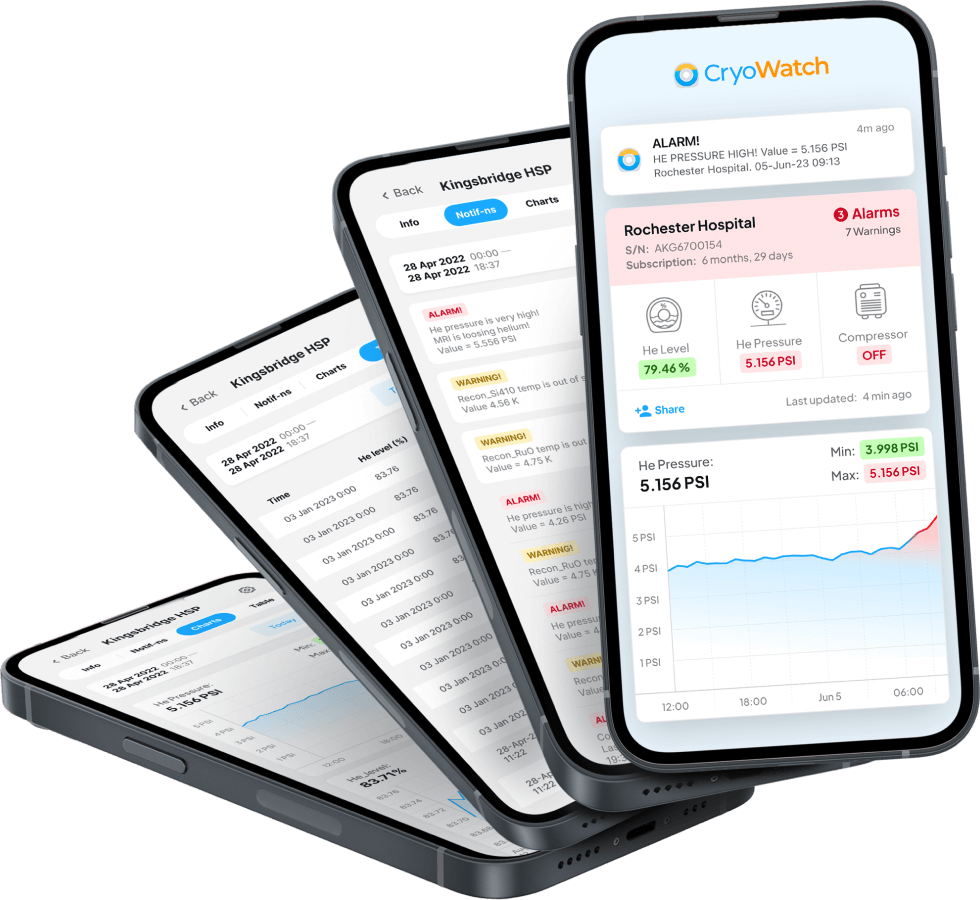
This is where the Cryowatch system comes in. It is a modern remote monitoring solution that makes your MRI operation transparent and safe.
Cryowatch connects directly to the Magmon unit and uploads data to a cloud service. Here is how it works in practice:
- 24/7 Constant Control: The system never sleeps and never takes weekends off. It checks your MRI parameters every minute.
- Smart Notifications: As soon as Magmon detects a rise in pressure or a drop in helium levels, Cryowatch sends an instant alert. The engineer receives a message on their phone or via email.
- Trend Analysis: The system allows you to see graphs of changes. If helium begins to evaporate slightly faster than usual, you will know in advance. You can then schedule maintenance before the situation becomes critical.
An Investment in Peace of Mind
Installing Cryowatch costs dozens of times less than a single quench. It is not just a gadget purchase; it is insurance for your business. Instead of spending huge sums on emergency helium refills and repairs, you pay for the stable operation of your clinic.
For GE healthcare Signa series machines, using the Magmon + Cryowatch combination is the industrial standard for safety. It allows you to turn emergency repairs into planned maintenance, saving time, money, and stress.
In conclusion, remote monitoring is the most effective way to protect your investment in high-tech medical equipment. Do not wait for the system pressure to rise—take control of the situation today.