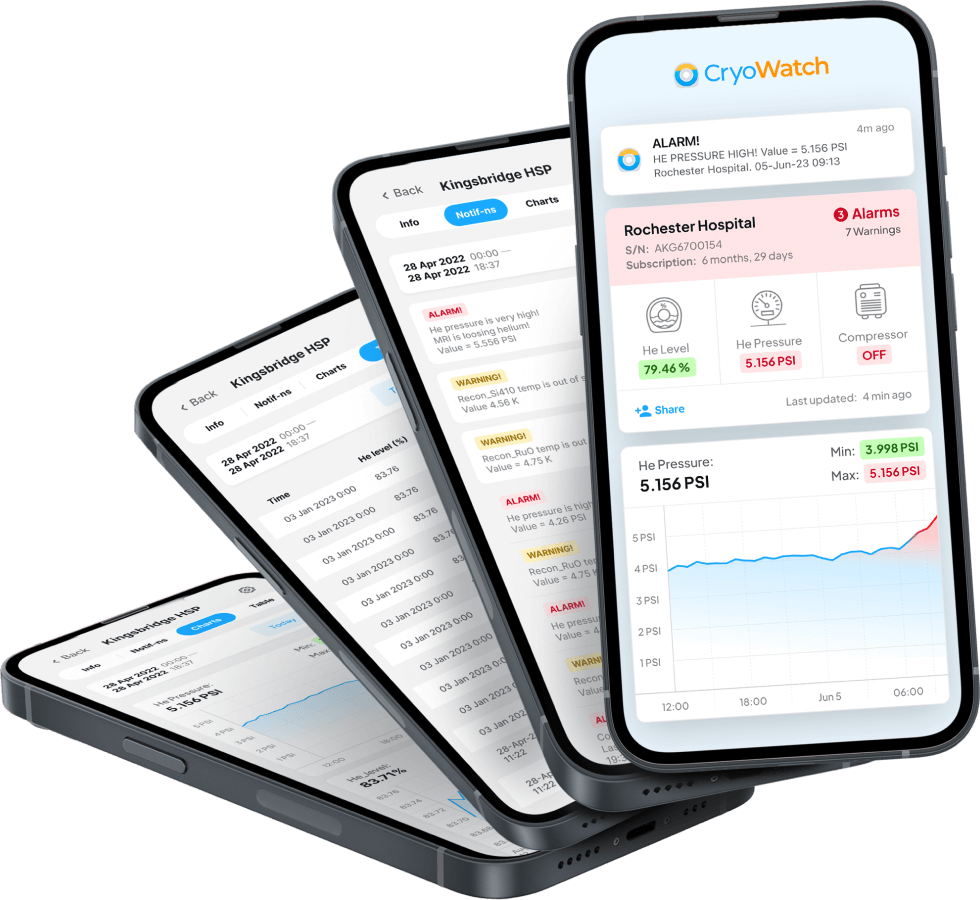
Many clinic owners are convinced that hiring an experienced radiologist and a certified engineer ensures the safety of their MRI system. Unfortunately, practice shows that even the most loyal employee can become the reason for a system failure. Not out of malice, but due to habit, negligence, or a lack of oversight.
In this article, we break down three scenarios where the “human factor” slowly destroys your GE Healthcare Signa, and how Cryowatch helps stop it in time.
1. “Ventilation Mode”: Violating the Scan Room Climate
Technicians often find the control room stuffy or hot. The simplest solution? Leaving the door to the technical room or the scan room itself open “for just five minutes.”
- The Danger: The strict temperature regime is violated. Humidity from the hallway enters the cooling components, leading to condensation. For electronics and gradient coils, this is a slow-acting poison.
- How Cryowatch Sees It: The system detects an anomalous rise in the ambient temperature around the magnet. Even if the staff closes the door before management arrives, a clear graph of the “temperature spike” remains in the logs.
2. Getting Used to the Noise: Ignoring the “Red Flags”
A helium compressor works loudly and monotonically. Over time, staff get used to the sound and stop noticing changes in its tone.
- The Danger: A metallic rattle or a change in rhythm often signals bearing wear or a drop in oil pressure. If this moment is missed, the compressor will seize, leading to an immediate pressure spike in the cryostat and a high risk of a quench.
- How Cryowatch Sees It: The Magmon unit reads motor load parameters and oil temperature. The system will raise an alarm long before the sound becomes obviously “sick.” We will notify the engineer: “Compressor operating in critical mode,” even if the technician claims “everything is normal.”
3. Hidden Incidents: “It’ll Fix Itself”
Sometimes the system issues a brief error, which the staff simply resets to avoid interrupting the patient flow. “Well, it blinked once, but it’s working now” — the most dangerous logic in MRI.
- The Danger: A brief chiller stoppage or a drop in water flow are symptoms of a serious system illness. Ignoring minor glitches leads to the system failing completely a week later, but by then, the “cold head” is already “fried.”
- How Cryowatch Sees It: Unlike a handwritten logbook, digital monitoring records every second of operation. We see all micro-stoppages and notify you of the need for preventive service.
The Bottom Line: Your staff should focus on treating patients, while the system should be monitored by an impartial algorithm.